Most creative outdoor ads and the production secrets behind them
Outdoor advertising, or Out of Home (OOH), has long evolved past the simple banner stretched over a metal frame. In a visually saturated city, grabbing the attention of passersby requires more than just standard text and a colorful image. Creative outdoor ads combine bold graphic design with advanced production techniques, structural engineering, and dimensional elements, turni
Outdoor advertising, or Out of Home (OOH), has long evolved past the simple banner stretched over a metal frame. In a visually saturated city, grabbing the attention of passersby requires more than just standard text and a colorful image. Creative outdoor ads combine bold graphic design with advanced production techniques, structural engineering, and dimensional elements, turning a simple billboard into a three-dimensional visual experience.
What turns an ordinary outdoor ad into a memorable one
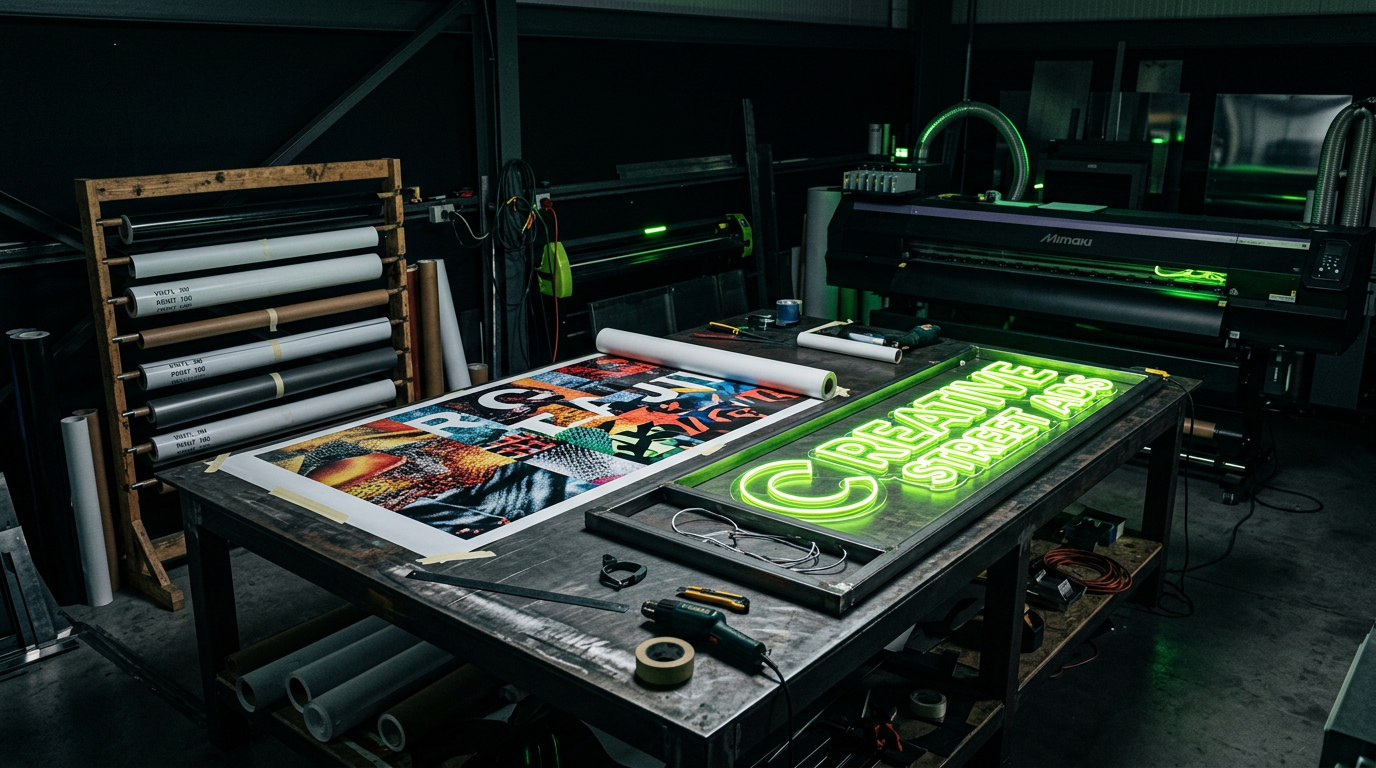
The difference between an ignored campaign and one that goes viral on social media often lies in physical depth and interaction with the surrounding space. We are no longer talking about simple vinyl prints, but physical elements that extend beyond the traditional flat surface. Sign makers now use CNC routing, thermoforming, and programmable lighting systems to bring complex creative concepts to life.
Key materials for custom outdoor projects
- Aluminum composite material (ACM/Dibond): perfect for rigid, flat backdrops that can be routed to let light pass through specific cut-out areas.
- Acrylic (PMMA): used for volumetric letters and backlit elements, offering uniform light dispersion and high weather resistance.
- High-density expanded or extruded polystyrene: coated with protective resins and acrylic paint, it is the ideal material for creating massive 3D elements without overloading the supporting structure.
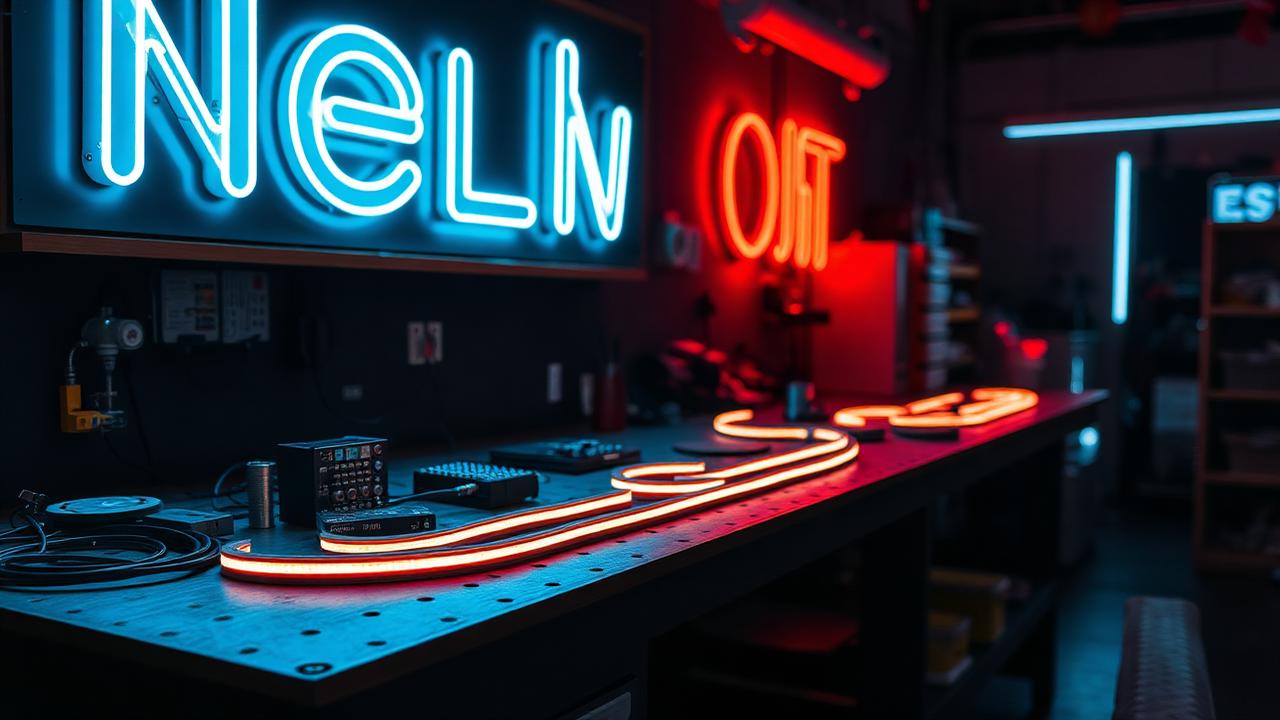
- Smart LED systems: they allow dynamic lighting effects, which can be programmed according to the time of day or pedestrian interaction.
Production techniques for maximum impact
To achieve a successful outdoor ad, the creative team must work closely with the production studio right from the sketching phase. Many ideas that look spectacular on screen are physically unrealistic or exceed realistic budgets. One popular technique is extending beyond the physical frame (2D or 3D extensions), where parts of the ad seem to escape the billboard. This technique requires extra metal supports and precise wind load calculations.
Common mistakes to avoid
- Excessive weight of suspended decorative elements without an additional support structure made of welded metal profiles.
- Choosing cheap LED modules without IP67 moisture protection, which will fail during the first heavy rainfall.
- Overly cluttered designs that do not account for reading distance and the speed of passing vehicles.
In outdoor advertising production, safety and physical durability are just as important as visual impact. A spectacular design that degrades after two weeks of harsh weather becomes a disservice to the brand.
Depending on the chosen materials, a well-produced outdoor ad has a useful lifespan of 3 to 5 years. ACM and acrylic elements offer the best resistance to weather and UV radiation, while printed elements require premium lamination for color protection.
Need a custom solution?
Talk to the LOOP DESIGN ADV specialists and get an offer tailored to your project.
Request a quote