
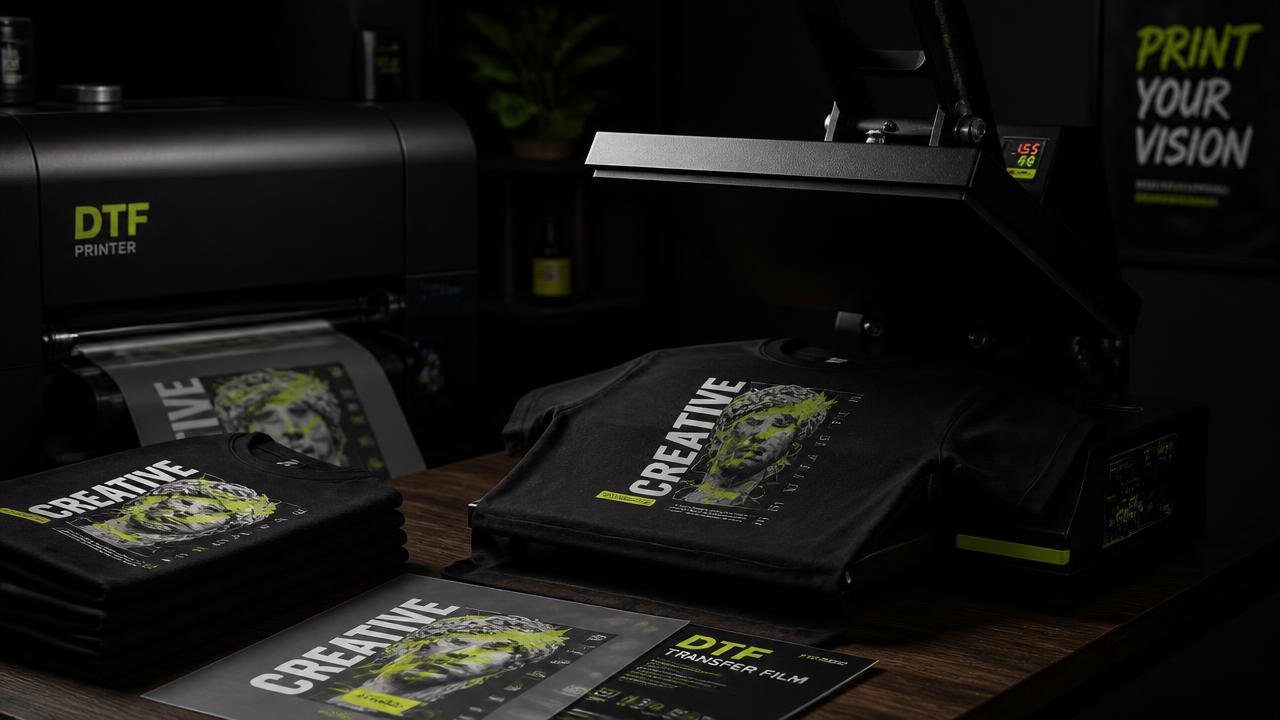
Textile printing: DTF, DTG, screen print or flex
Which technique to choose based on fabric, run size, durability and how the print feels.
For t-shirts, hoodies and workwear there are four techniques in common use. The right choice depends on three things: what the fabric is made of, how many pieces you order and how complex the artwork is.
Quick comparison
| Technique | Fabrics | Suitable run | Feel and durability |
|---|---|---|---|
| DTF, film transfer | cotton, polyester, blends, technical fabrics | from 1 piece | light film on the surface, very good wash resistance |
| DTG, direct to garment | 100% cotton or at least 80% cotton | from 1 piece | ink sits in the fibre, soft feel |
| Screen printing | cotton and blends | from 30 to 50 pieces | resistant layer, most durable on large runs |
| Flex transfer, cut vinyl | almost any textile | from 1 piece | cut film, ideal for text and numbers |
DTF, the most flexible option
Artwork is printed on a film, dusted with adhesive, dried and heat pressed onto the fabric. It works on any garment colour, including black, because the print carries a white underbase. It is the right choice for small orders with full colour artwork.
DTG, for cotton and fine detail
Ink is printed straight into the textile fibre, so the print is not felt and the fabric breathes. It works best on light coloured cotton. On polyester the result is poor, and on dark fabrics it needs pre-treatment.
Screen printing, for large volumes
A screen is made for every colour, so setup costs money, but the unit price drops dramatically on large runs. It is the most durable solution for workwear worn daily and washed often.
What to know before ordering
- Tell us the fabric composition. Cotton, polyester or a blend completely changes the recommended technique.
- Send vector artwork, or at least 300 dpi at the real print size.
- Check the maximum print size, usually around 30 × 40 cm on the chest.
- Pantone colours can be approximated, but not matched exactly on textile.
- Technical and waterproof fabrics need a test before the full run.
Care instructions for the end user
- First wash 24 hours after printing.
- Wash inside out at 30 degrees maximum, no bleach.
- No high heat tumble drying and never iron directly on the print.
Need a recommendation for your project?
Tell us what you want to produce and we will suggest the material, format and timeline.